
Total Rockbreaking Solutions is helping quarry and mining operators protect uptime through practical, site-driven engineering improvements.
In hard rock quarrying and mining environments, reliability is essential. When material flow stops, the cost is immediate, and often significant. For Total Rockbreaking Solutions ( TRS ), keeping rockbreaking systems operating safely and efficiently is less about headline-grabbing technology and more about smart, practical engineering decisions made on site.
As the exclusive Rammer dealer in Western Australia, TRS works closely with Sandvik’s global Rammer network, drawing on shared technical knowledge while adapting equipment to suit the harsh realities of local quarry and mining conditions. For TRS director Paul Ingleson, that balance between global expertise and local problem-solving is where real value is created.
“Rammer has a strong global dealer network, and a big focus is making sure everyone is trained the same way and sharing learnings from the field,” Ingleson said. “If something happens anywhere in the world, that information flows through the network so other dealers can learn from it and apply it locally.”
This knowledge and technical expertise have recently supported a series of site-specific modifications carried out by TRS on a Rammer XL1200 rockbreaker boom system by relocating the RamLube II automatic hammer greasing system. The result is a safer and long-lasting asset life.
Protecting critical components
Hydraulic rockbreaker hammers rely on consistent lubrication to prevent excessive wear on internal bushes and tooling. In standard configurations, the greasing cartridge is mounted close to the hammer itself, where it is exposed to falling rock and debris.
“In mining and quarry applications, these hammers are often buried in rubble while they’re working,” Ingleson said. “That puts the greasing system in a vulnerable position, and if it gets damaged, lubrication stops, which shortens the life of the hammer wearing components.”
To mitigate that risk, TRS relocated the automatic greasing unit from the rockbreaker hammer to a protected position higher up on the boom, routing lubrication lines down to the hammer.
“By moving it out of the danger zone, we’re protecting the lubrication system and making sure it continues doing its job,” Ingleson said. “Good lubrication is critical and poor lubrication is one of the main reasons hydraulic rockbreakers fail prematurely.”
Although the modification was developed for a specific customer, Ingleson said it has the potential to become a broader solution across other installations.
“It’s not something we’d done before, but the customer asked TRS for a solution, and it made sense for their application,” he said. “Once we have more data from the field about the success of this modification, it’s something we’d consider rolling out elsewhere.”
Rethinking the power pack
TRS also completed a series of upgrades to the Rammer hydraulic power pack, focusing on serviceability, cleanliness, and fire safety, all critical factors in remote quarry and mining operations.
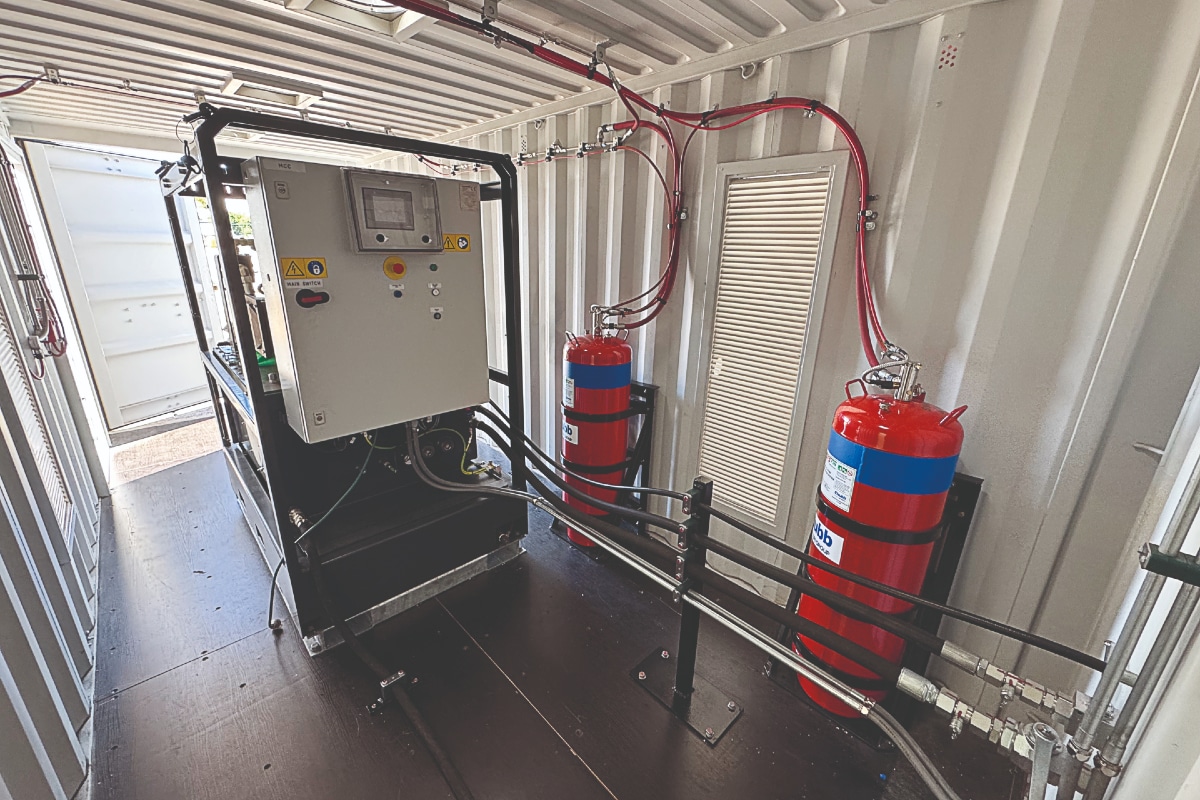
Rather than using a traditional exposed configuration, the hydraulic power unit was mounted inside a custom-built sea container, providing full weather protection while maintaining easy access for maintenance.
“Instead of removing covers to inspect or service the unit, technicians can walk straight into the container and see everything clearly,” Ingleson says. “It creates a much cleaner environment, which makes maintenance easier and extends the life of the equipment.”
The enclosed design also allowed TRS to integrate an automatic fire detection and suppression system, a key safety upgrade for hydraulic equipment operating in high-risk environments.
“If there’s a fire, the system automatically detects it and discharges foam throughout the enclosure,” Ingleson explains. “From a safety point of view, that’s a major improvement.”
Ingleson said these kinds of upgrades are about making equipment easier to look after, not just protecting it from damage.
“Serviceability is often overlooked, but it’s critical,” he says. “If equipment is easy to maintain and easy to keep clean, it gets maintained properly. That directly impacts safety, reliability and asset life.”
Local solutions, global backing
While the modifications were carried out locally, they reflect a broader philosophy within the Rammer dealer network: combining global engineering standards with real-world operational experience.
“Rammer is a brand owned by Sandvik, and every region has an exclusive dealer,” Ingleson says. “We’re the WA dealer, and Sandvik supports all Rammer dealers globally. That structure gives us access to shared technical knowledge, but also the freedom to adapt solutions for local conditions.”
For quarry operators, that combination translates into equipment that is not only robust but tailored to the realities of Australian operations.
As quarries continue to push for higher productivity with fewer unplanned stoppages, it’s often these behind-the-scenes engineering decisions that deliver the greatest long-term returns.
“At the end of the day, it’s about keeping machines running safely for as long as possible,” Ingleson says. “If we can improve maintainability, protect critical components and extend service life, that’s a win for everyone.”
Rammer authorised dealer network in Australia:
• Walkers Hammers (VIC, SA, TAS), walkershammers.com.au
• Groundtec (NSW), groundtec.com.au
• QLD Rock Breakers (QLD, NT and PNG), rdw.com.au/qld-rock-breakers
• Total Rockbreaking Solutions (WA), totalrockbreaking.com.au
For more information, visit attachmentspecialists.com.au/rammer or rammer.com
The post Rock solid reliability appeared first on Quarry.