
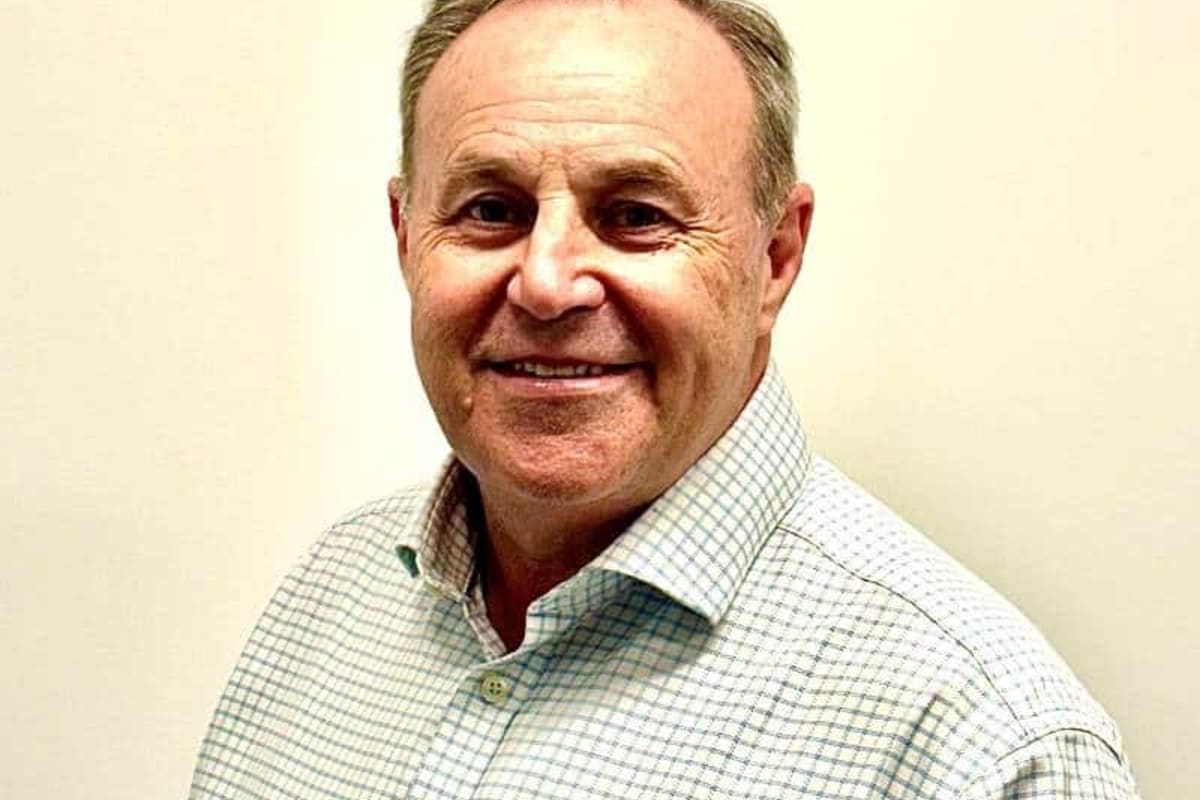
Pacific Lime and Cement’s new chief executive officer of its cement division Kevin Savory is excited about the challenge of growing the domestic supplier in the local market.
When it comes to construction materials, Kevin Savory has seen it all.
From the quarry to the clinker kilns, cement mills and downstream precast operations, across the Australian, Filipino and Papua New Guinean markets, Savory has developed a fair amount of experience across a career stretching more than three decades.
But when Pacific Lime and Cement managing director Paul Mulder called, Savory knew he had found his next chapter in a storied career at Pacific Lime and Cement. In many ways, it was a return of sorts for Savory after previously working with Mulder when Pacific Lime and Cement was known as Mayur Resources.
“I jumped on a plane with him [Mulder] and met the team and [saw] what had changed and I was very excited to come on board and base myself here in Port Moresby,” Savory told Quarry.
“[With the lime project], there’s a real buzz and excitement around it. Paul [Mulder] has developed this project with zero debt and that is a massive achievement. This is a unique project in mineral processing where we’ll be taking it from the mine to a finished product.
“And we’re looking to do the same with the cement business.”
Queensland origins
Savory got his start in the construction materials business by joining Queensland Cement, which later became part of Cement Australia, after a stint in the Australian Army where he specialised in logistics.
The army background has stayed with Savory throughout his time in the construction materials sector. He explained the skillset, being able to adapt, make quick decisions and be innovative, transferred over when he later had to make decisions over capital expenditure and manage dynamic operating environments.
He told Quarry his first break in the industry came when he transitioned to a role in operations at the Bulwer Island grinding station.
“I had a lot to learn, and I went through the grinding station’s operations the kiln operations and then through to the sales and marketing side in time,” he said.
“I’ve done quite a number of roles in the industry. I purposely sought out those opportunities, so I had an understanding of the whole of the business.
“I was pretty fortunate to get those opportunities and take those risks, but it has been thoroughly satisfying.”
Market differences
Savory’s career has taken him across international markets including the Philippines, Papua New Guinea and Australia.
He spent time with Holcim Philippines as its vice president for supply chain and, prior to joining Pacific Lime and Cement, worked for CRH’s Australian subsidiary Infrastructure Products Australia as its managing director.
Three different countries, with three different approaches to infrastructure and using construction materials but those experiences will be key in Savory’s new role.
“The Australian market is more evolved. The focus is on a bulk-delivered cement product in pneumatic tankers,” Savory said.
“The Philippines market is more of a ‘bag market’ and it is a developed market in that sense as 90 per cent of the product is sold in cement bags. That is the same here [in PNG].”
While all three markets are in effect island nations, there are nuances within them. PNG and the Philippines have a reliance on marine transport to move product, whereas, Australia, as Savory said, moves cement predominantly through road transport.
Australia has a lot of existing infrastructure in terms of cement kilns and grinding stations, whereas with Pacific Lime and Cement’s PNG operations, everything is being built from the ground up. The company has plans to build a new cement plant which will include modern technology which will deliver improvements in efficiency and sustainability when compared to older infrastructure. The new cement plant will be a key part of the company’s production process which will result in products tailored to the market.
“We’ll be able to tailor the cement to the demands of the PNG market. Rather than importing it and getting a generic product, we’ll be able to provide a product that suits [these conditions],” he said.
“The coastline is an important part of PNG which will require sulfate-resistant cement that we’ll be able to produce. In the high-rainfall environment that we have here in PNG that kind of cement will be a really important offering to the market.
“While the major Australian players can do tailor their product, that’s not being provided locally in PNG and that’s one of the great opportunities for us.”
New chapter
Pacific Lime and Cement’s ambition to be a major domestic supplier of cement and Savory’s remit is help foster that ambition into a reality.
The company has looked abroad at comparative markets and believes it has a lot to offer domestic customers in PNG.
“We want to displace the imports in the market, and we want to lower the cost of cement to the customer, and we expect that will boost demand,” Savory said.
“There’s a lot of research in other emerging countries where that has been the case. We’re working with the International Finance Corporation (IFC), which is part of the World Bank, to show the value of that.
“Our focus is on producing domestically and sell the cement into the domestic market. We want to be a domestic producer first and foremost and we expect that our business will go a step towards growing and building PNG.”
While the company is starting at square one with its cement operations, it has bold ambitions for what it can achieve this year. The company is continuing to work with the IFC on a definitive feasibility study, which is expected to take six to eight months, before firming up a final investment decision on the cement project.
Those two key phases could be potentially finalised as soon as the end of 2026, with an estimated two-to-three-year build period for the required infrastructure.
A key part of this so far has been consulting with the local landowners through a collaborative approach as it moves through the phases of building a cement operation.
“The landowners have been very supportive of the project. From working out the landowner agreement, being committed to it and getting them onboard has been great,” he said.
“Their support and commitment to the project is as equally important as ours. They see the vision [we have] and they also want to build a legacy for their children and their villages.”
The post Cemented in PNG appeared first on Quarry.