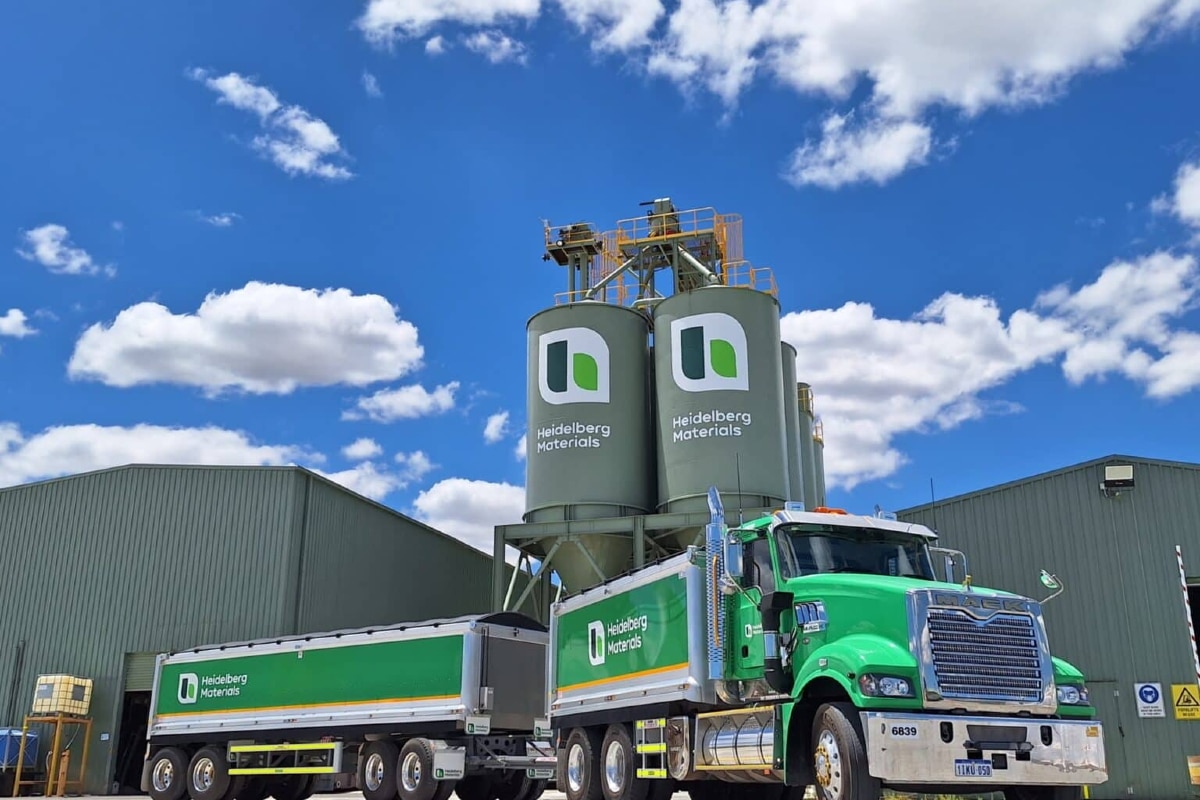
has struck a major deal to expand. Image: Heidelberg Materials
Heidelberg Materials Australia has struck a landmark deal with Maas Group Holdings as it continues to shape its business down under.
Heidelberg Materials Australia (HMA) is set to acquire the construction materials assets of Maas Group Holdings.
The agreement, reflecting a total enterprise value of $1.7 billion, will see Heidelberg Materials gain a significant portfolio of quarrying, concrete, and asphalt assets along Australia’s east coast, while it marks a transition point for Maas Group Holdings (MGH).
At the time of writing, the deal is subject to customary closing conditions, including approval from the Australian Competition and Consumer Commission, the Foreign Investment Review Board, and MGH’s shareholders, and is expected to close in the second half of 2026.
The assets include 40 quarries, 22 concrete plants, two asphalt operations, more than 1000 employees and a recycling site. According to HMA, the quarries have combined reserves of more than 350 million tonnes. With sites across New South Wales, Victoria and Queensland, the deal significantly bolsters HMA’s presence in key markets, especially in regional areas.
“The acquisition of Maas’ construction materials division reflects our ongoing commitment to delivering consistent, high-quality products and services to customers across Eastern Australia,” Heidelberg Materials Australia chief executive officer Phil Schacht said.
“Maas’ strong reputation and regional expertise complement our business, and we’re looking forward to welcoming the team as we continue delivering reliable, sustainable materials to our customers.”
Australian value
HMA has made no secret of the fact that it sees Australia as a valuable construction materials market. Alongside the other key players, HMA has been busy over the past few years consolidating its presence in the market through acquisitions, particularly on the east coast.
In fact, Heidelberg Materials chief financial officer René Aldach underlined this sentiment in his comments following the acquisition’s announcement.
“With this acquisition, we will enhance our position in Australia, driving further growth and promoting circularity. We are complementing our market presence in attractive regions while leveraging substantial synergies,” he said.
“Our growing base of customers along the eastern seaboard will particularly benefit from an expanding network of aggregates, asphalt, and ready-mixed concrete sites delivering high-quality, sustainable products.”
In context, the deal for MGH’s construction materials assets is just the latest in a line of acquisitions by HMA in the Australian market. Late last year, HMA’s joint venture Cement Australia closed a deal for the cement operations of the Buckeridge Group of Companies (BGC) in Western Australia. As part of that, HMA gained BGC’s ready-mixed concrete and associated logistics operations at Bassendean.
Only months earlier in 2025, HMA inked deals in quick succession that broadened its operations in Victoria and Queensland. The first was the acquisition of Hardcore Sands and Pink Lily Sands, which included two sand quarries in Rockhampton. That was closely followed by a deal for Midway Concrete’s premixed concrete business, which supplied materials into the greater Melbourne and Geelong markets.
All the deals pointed to HMA’s desire to grow in Australia by adding “bolt-on” acquisitions to its existing core business. Bolt-on acquisitions are nothing new in business, but they are often a successful way for larger players to accelerate their growth and consolidate their market presence.
“This acquisition complements Heidelberg Materials’ existing concrete and quarry operations … [and] aligns with our strategy of acquiring bolt-on assets that support the company’s existing integrated positions in major markets,” Schact said following the Midway announcement in 2025.
A Maas pivot?
Maas Group Holdings is one of the great success stories of Australian business. As the story goes, former South Sydney player Wes Maas started the business with one bobcat and a tipper truck, and from those humble beginnings, MGH grew to operate across construction materials, civil construction, hire manufacturing, equipment sales, and residential and commercial real estate.
And the construction materials business was a longstanding, key part of MGH. In its first-half results, announced on February 24, 2026, the construction materials segment reported strong results.
“MGH delivered strong results from both the construction materials portfolio as well as the remaining businesses, which are well positioned to benefit from structural growth across electrical infrastructure, energy transition and digital infrastructure investment,” Maas said.
In late 2024, MGH added to its construction materials business through three acquisitions, including 100 per cent of Cleary Bros’ assets, a 75 per cent stake in Capital Asphalt, which supplied southern NSW and the ACT, and a freehold hard rock quarry and associated business assets in greater Western Melbourne. Overall, the trifecta netted MGH three hard rock and sand quarries, three concrete batch plants, and an asphalt plant.
So why would MGH pivot away from construction materials?
The answer lies, at least somewhat, in artificial intelligence and digital technology.
MGH has indicated to the market that it wants to be prepared for the “next generation” of infrastructure, which it sees as a combination of digital infrastructure (data centres and artificial intelligence computer clusters) and the electrification sector, leveraging its existing electrical business.
As part of this, MGH has taken a 1.7 per cent interest in Firmus Grid following a $100 million equity investment. Firmus has made its name in artificial intelligence (AI) infrastructure in Australia and overseas.
“Our investment in Firmus reflects our approach to deploying capital into areas where we see strong structural tailwinds,” Maas said.
“The investment supports closer strategic alignment and positions MGH to participate in future digital infrastructure opportunities, while retaining flexibility and capital discipline.”
Maas said he was proud of the company’s journey in construction materials but was ready for a new, digital-focused era.
“We are extremely proud of the construction materials business we have built over many years. The scale, quality and performance of [it is] a testament to the hard work and commitment of our people,” he said.
“The [construction materials] transaction allows MGH to crystallise value from a high-quality asset while positioning the group toward the next phase of infrastructure investment – including digital infrastructure, electrification, and AI-enabled assets.”
The post Heidelberg Materials expands with Maas Group Holdings acquisition appeared first on Quarry.